Stakeholder Readiness: The Critical Foundation for Successful Organizational Change
- Melissa Levitt Seldin
- Apr 29, 2024
- 2 min read

In today's rapidly evolving business landscape, organizations must continually adapt and evolve to remain competitive and relevant. However, the success of any transformative initiative, be it a new program, policy, or digital application, hinges on a critical factor: stakeholder readiness. It's not merely about having the right tools or strategies in place; it's about cultivating an organizational culture that embraces change, fosters engagement, and nurtures a curiosity to explore beyond the status quo.
Stakeholder readiness is a multifaceted concept that encompasses interest, motivation, commitment, and engagement. It's the fuel that propels organizations forward, enabling them to navigate the often-challenging waters of change with confidence and resilience. When stakeholders are genuinely ready, they are invested in exploring what change might look like and how it could impact participants and beneficiaries.
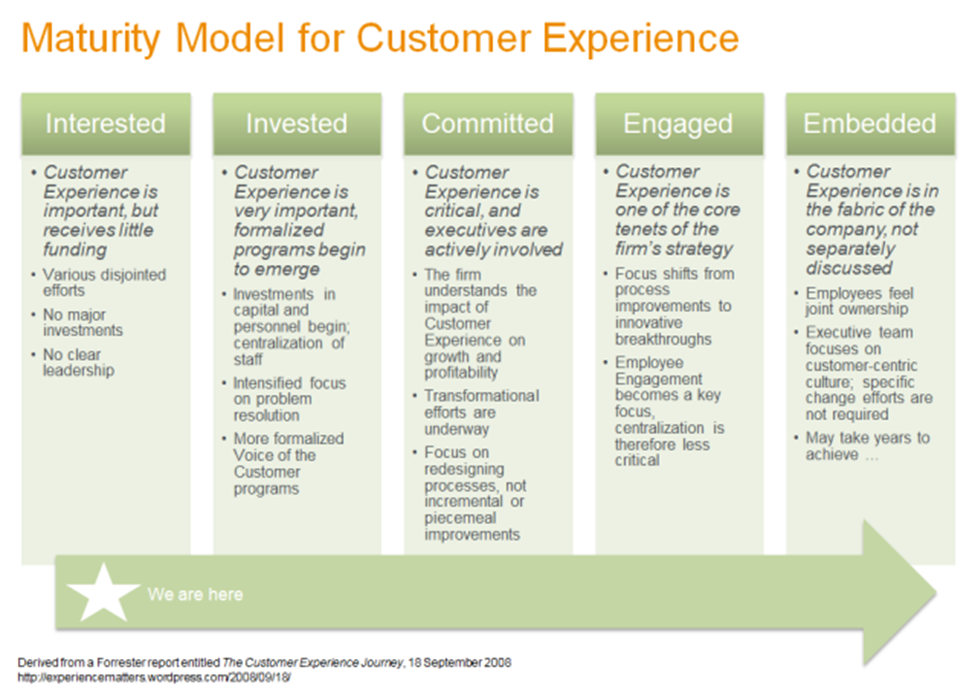
We can draw insights from the Maturity Model for Customer Experience, a framework designed for user experience researchers to assess an organization's readiness for change. While initially intended to evaluate an organization's user experience journey for websites or apps, this model can serve as a valuable template for assessing stakeholder readiness across various domains.
In the early stages of readiness, organizations may find themselves in the "Interested" phase, where they acknowledge the need for change but lack the commitment or resources to embrace it fully. They may give lip service to evaluation results without allocating funds or demonstrating a genuine desire for transformation. As they progress to the "Invested" stage, organizations recognize the ineffectiveness of their existing programs but may face resistance or implement only marginal changes.
True organizational readiness emerges when change is coupled with the capacity and commitment to act. In the "Committed" phase, leadership actively listens to evaluators and sets the stage for programmatic changes. During the "Engaged" phase, evaluation and continuous improvement become integral to the organization's operations, with dedicated resources and processes in place.
Finally, in the "Embedded" phase, continual improvement and evaluation are seamlessly woven into the organizational fabric. Changes to programs or policies are data-driven and well-documented, fostering a culture of continuous learning and adaptation.
Cultivating stakeholder readiness is a journey that requires patience, perseverance, and an unwavering commitment to embracing change as a catalyst for growth and success. By nurturing an organizational culture that values curiosity, engagement, and a willingness to challenge the status quo, organizations can unlock their full potential and thrive in an ever-changing world.


Comments